
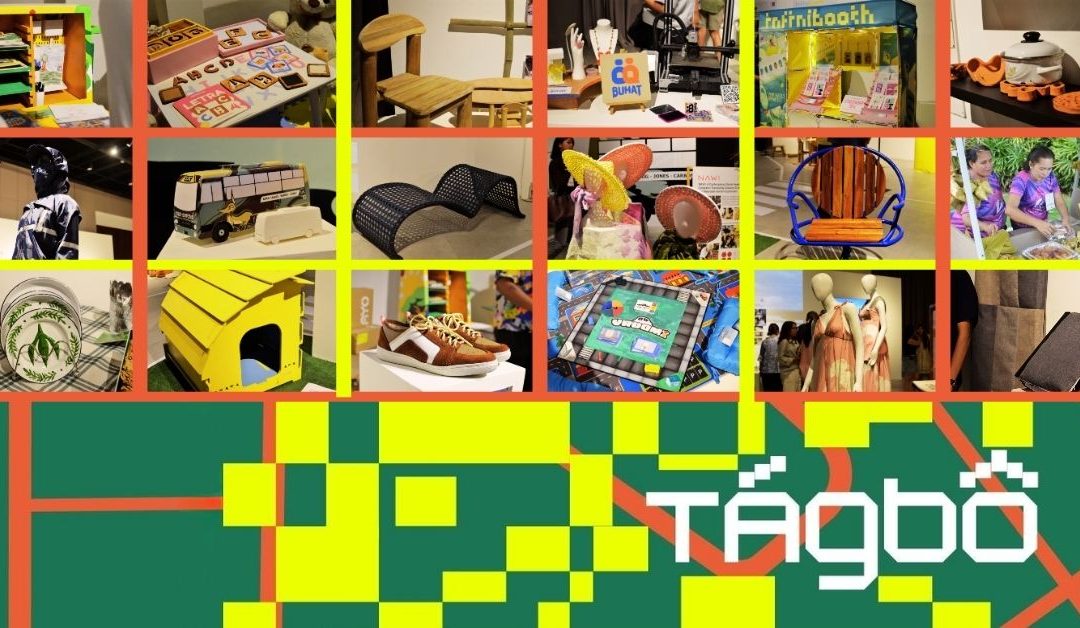
The graduating students of the UP Cebu Fine Arts Design Program 2026 presented their thesis projects through Tágbô, an exhibition that showcased design research and interventions grounded in community engagement, cultural understanding, and real-world problem-solving. Bringing together diverse design responses to contemporary social, cultural, and environmental issues, the exhibition reflected the program’s studio-based approach to thesis development.
Guided by three thematic studios—Studio Identity, Studio Well-being, and Studio Sustainability, students explored how design can preserve heritage, improve quality of life, and foster more sustainable futures.
Studio Identity — Designing Through Heritage, Culture, and Inclusion
Studio Identity, advised by Asst. Prof. Jay Nathan Jore, focuses on design rooted in heritage, culture, and inclusion, interrogating who designers create for and whose stories are represented through design. The projects under the studio explored how cultural memory, local traditions, and community narratives can be translated into contemporary design interventions.
Among these is Casa Musa by Keilah Asilom, a contemporary prêt-à-porter collection inspired by the historical significance of Cebu’s Vision Theatre. Through wearable fashion informed by local embroidery traditions, the collection transforms architectural and cultural memory into garments that allow contemporary users to engage with Cebu’s artistic heritage.
You can find out more about Asilom’s project here: https://m.facebook.com/story.php?story_fbid=pfbid02ycRkFZc7oQ2ofgjrSAt66MQ8a2LunMSzV6CkGkrxqBm1LeSDc5b1KgQ5WebNHfBPl&id=100093059525279
Likewise, Nawi by Johnsenn Rosatase revisits the traditional Cebuano sarok, reimagining the iconic headwear as a customizable fashion accessory while maintaining its connection to local weaving traditions and craftsmanship.
This thesis exhibition was awarded with Special Citation in the Ganti sa Hamiling Paniksik sa Desinyo
You can find out more about Rosatase’s headwear collection here: https://m.facebook.com/story.php?story_fbid=pfbid02wByyxw1wv1Ytkpzf8VDyUpoUjjGVcDC5PMa2d3yrNCkRhVUrWqn76oEUZGEXAa7Bl&id=100093059525279
Industrial and manufacturing heritage takes shape in Mantawi by Yuan Quimno, a dinnerware collection that reinterprets traditional sartin enamelware through the cultural and manufacturing legacy of Mandaue City. By highlighting local production processes and decorative traditions, the project elevates a familiar household object into a celebration of regional identity.
You can find out more about Quimno’s dinnerware collection here: https://m.facebook.com/story.php?story_fbid=pfbid02yHrxcLwXpNRJEdzZEfvQkWjApgEwTfrYzUgwiryp1sZH6EkHvx5PwnWXsWLSQBg2l&id=100093059525279
Public spaces and local narratives converge in Baybáo by Jhamia Khiz Meca, which introduces a modular outdoor furniture system designed for the Compostela Boardwalk. Drawing inspiration from Compostela’s carabao and queseo heritage, the project enhances comfort while strengthening the boardwalk’s sense of place.
You can find out more about Meca’s furniture system here: https://m.facebook.com/story.php?story_fbid=pfbid0M2NFsytbvU6oAvXbpNpNAe1X8mRqUoFNrQCHgXYMbv5be5TJFJzxXUpUXbb1NejZl&id=100093059525279
Transportation culture becomes a site for cultural preservation in Tagdalan by Jan Paolo Cormanes. The project translates the visual storytelling traditions of Cebuano jeepneys into a modern wayfinding and transit identity system, demonstrating how public transportation can remain culturally meaningful amid modernization efforts.
You can find out more about Cormanes’ implementation of Tagdalan here: https://m.facebook.com/story.php?story_fbid=pfbid0oGY7yXkFhTL6nNZHjwm1aKfjhgrGx8LyrEvNym3zYt3piujZYam1CkTnTuEnEJq1l&id=100093059525279
Community foodways and informal urban economies serve as the foundation for Dalá by Ethaniel Dawn C. Daro, a mobile food cart system inspired by the culinary traditions of Suba and Pasil. Designed to support ambulant vendors, the project positions food not only as livelihood but also as a catalyst for social interaction and community cohesion.
You can find out more about Daro’s mobile cart here: https://m.facebook.com/story.php?story_fbid=pfbid0SdV8VKjfgKKKtzehM1qsi4oqr18RZWC4obN9b8MA4jKQmzZzBEiKptESFZiwXoLyl&id=100093059525279
Completing the studio’s projects is Hayag by Jessin Kionisala, a modular mobile community library that transforms informal urban spaces into child-centered learning environments. Through adaptable and mobile infrastructure, the project encourages literacy, imagination, and community participation among children in underserved communities.
This thesis exhibition was awarded Best Thesis in the Ganti sa Hamiling Paniksik sa Desinyo
You can find out more about Kionisala’s mobile library here: https://m.facebook.com/story.php?story_fbid=pfbid02hhiENTVPqvBzF1gvDEJSfCHsD25ww4ogQv1WC3KfrNuEAhAcQR8FL4ENGB9dStUil&id=100093059525279
Together, the projects under Studio Identity demonstrate how design can become a vehicle for cultural continuity, community empowerment, and the preservation of local narratives in rapidly changing social contexts.
Studio Well-being— Designing for Better Living
Under the guidance of Asst. Prof. Lionel Sanchez, Studio Well-being explores design that prioritizes physical and mental health, creating spaces, systems, and objects that support healthier and more inclusive ways of living. The studio’s projects address diverse users and communities, ranging from sanitation workers and senior citizens to children, entrepreneurs, and urban animal populations.
Leading the studio’s projects is Ayahay by Janssen Gabuya, an ergonomic personal protective equipment system designed for garbage collectors in Cebu City. Responding to issues of comfort, safety, and dignity in sanitation work, the project reimagines PPE suited to the realities of the Philippine climate.
You can find out more about Gabuya’s equipment system here: https://m.facebook.com/story.php?story_fbid=pfbid0qh6F5bjJM5DB8ycFGx7b3FfEqb8b3Zmihgcu996TC7WzGRyKzUR21oPdLPM8uVS9l&id=100093059525279
Urban animal welfare is explored through Roof! Roof! by Zoe Saclo, which proposes digitally fabricated modular shelters for community dog populations. Designed to complement Cebu City’s Capture, Neuter, Vaccinate, and Return (CNVR) program, the project provides safe and adaptable refuge spaces for stray dogs integrated into urban communities.
You can find out more about Saclo’s rooftastic modular shelters here: https://m.facebook.com/story.php?story_fbid=pfbid02krrfLLBSijFNnAhAcMYyEg5py4snooziSdfXunG6mFaz69cNbf8DG8dtSZePBnEFl&id=100093059525279
This thesis exhibition was awarded with Special Citation in the Ganti sa Hamiling Paniksik sa Desinyo
For creative entrepreneurs, Infinibooth by Zen Lapiña offers a modular merchandising booth system designed for Anime, Comics, and Games (ACG) convention vendors. Addressing challenges in transportation, setup, storage, and display, the project seeks to improve efficiency while reducing physical and cognitive strain among users.
You can find out more about Lapiña’s ACG model here: https://m.facebook.com/story.php?story_fbid=pfbid0LYxNo7TAuGCwNo5BGF5JpqHVUN3Uy5BK9PHQvoTbpeduXVFbimD4HGtuo23Wrt5Fl&id=100093059525279
Supporting active aging is Kahimsog by Aiko Fujima, a design intervention that introduces accessible outdoor exercise equipment specifically developed for senior citizens. Through ergonomic and socially oriented design strategies, the project encourages physical activity and social engagement among older adults.
You can find out more about Fujima’s exercise equipment here: https://m.facebook.com/story.php?story_fbid=pfbid035aBoeSjgrkSLB8sAy3agcHWgTceqsKpo6dkWSBaRLV6ZBDWjzaJSuW4ZuWc7dpMUl&id=100093059525279
Inclusive education serves as the focus of Amuma by Reem Abdul, a multi-sensory learning system designed for children with Special Educational Needs (SEN). Developed in collaboration with caregivers and educators, the project creates accessible tools for literacy and numeracy learning while supporting diverse learning experiences.
This thesis exhibition was awarded Second Place in the Ganti sa Hamiling Paniksik sa Desinyo
You can find out more about Abdul’s Multi-Sensory Learning System here: https://m.facebook.com/story.php?story_fbid=pfbid02c21JFNJhFu3rwWgCKtKPARoiHepawAp819psXCdu9UYdrfLxZiRtewqz3rtiaStNl&id=100093059525279
Meanwhile, Vroomi by Marie Jemweillyn Entienza transforms traffic education into an interactive and engaging experience for young learners. Through game-based learning, the project seeks to cultivate road safety awareness and encourage long-term retention of traffic concepts among children.
You can find out more about Entienza’s project here: https://m.facebook.com/story.php?story_fbid=pfbid02HWUFH9G7PKMeZ8m4UXZoTqWF8CJZfTWLBUvD4n196NeS7h7G5ovv9F5ieh54UbdQl&id=100093059525279
Collectively, the projects under Studio Well-being illustrate how design can address everyday challenges while fostering healthier, safer, and more inclusive environments for diverse communities.
Studio Sustainability—Rethinking Materials, Systems, and Lifecycles
Advised by Asst. Prof. Albert John Mallari, Studio Sustainability focuses on design that rethinks materials, systems, and lifecycles within the realities of urban consumption. Through material innovation, circular design principles, and community-based production systems, the studio’s projects investigate more sustainable ways of making and living.
Among the featured works is Húlma by Faye Yolanda Salvacion, which explores the integration of animal bone food waste into traditional terracotta practices. By transforming discarded materials into functional ceramic products, the project demonstrates how waste streams can become valuable resources while supporting local pottery traditions.
This thesis exhibition was awarded Third Place in the Ganti sa Hamiling Paniksik sa Desinyo
You can find out more about Salvacion’s terracotta collection here: https://m.facebook.com/story.php?story_fbid=pfbid0kYqae7YnyEGQ21Yj6eT5hm6ZZksB1z86SBV32DLpNiDAtEdoYHG9EKmsFU2gKPd6l&id=100093059525279
Repair culture serves as the foundation for Ayo by Ardinian Jaq Sanque, an infinitely repairable footwear system informed by the expertise of Junquera Street cobblers and Carcar shoemakers. The project promotes repairability as a sustainable alternative to disposal while preserving local craftsmanship.
You can find out more about Sanque’s innovation here: https://m.facebook.com/story.php?story_fbid=pfbid0SRagKzq8eNJJFuniXzQvcGbsfRPRabwzGWLowBfzYgXxm7x8x6zahfTFj3g2jsExl&id=100093059525279
Digital platforms and creative collaboration come together in Buhat by Precious Angeli Suarez, a matchmaking platform designed to connect artisans, makerspaces, and users. Through opportunities for collaboration, workshops, and knowledge exchange, the project strengthens relationships between traditional and contemporary makers within Cebu’s creative ecosystem.
This thesis exhibition was awarded with Special Citation in the Ganti sa Hamiling Paniksik sa Desinyo
You can find out more about Suarez’s platform here: https://m.facebook.com/story.php?story_fbid=pfbid0Bkcix3aLdY6yrLdAtLRTFBRKL26Ek4pDxWc5dcjihfqmxjJSrZeHoasycvnDBhzrl&id=100093059525279
Public transportation is reimagined through Hul-i by Elisha Durero, a modular upholstery system that incorporates reclaimed materials, repair-oriented principles, and local upholstery knowledge into jeepney seating design. The project highlights sustainability through comfort, maintenance, and material longevity.
You can find out more about Durero’s project implementation here: https://m.facebook.com/story.php?story_fbid=pfbid0atvD132HDgAFfyrZvd7pNq7xJZ2X248Phd3e8t7uy3BYzVvqYvP6CZ9gAR2TcLN1l&id=100093059525279
Finally, Blume by Kenny Gem Nadela introduces bamboo classroom furniture co-developed with vernacular bamboo makers from Casili, Cebu. By integrating local craftsmanship with contemporary educational furniture design, the project promotes sustainable material use while creating child-friendly learning environments.
You can find out more about Nadela’s bamboo furniture collection here: https://m.facebook.com/story.php?story_fbid=pfbid07zjzpVErhD3JjAa3Lt5tnjJk3jCWZUnESuoqKi3QcQ3Cq9e4rKyMdrjQkevB5HfWl&id=100093059525279
The projects under Studio Sustainability demonstrate how design can contribute to circular economies, support local industries, and encourage more responsible relationships between people, materials, and the environment.
A Convergence of Design Futures
Through the collective efforts of the graduating Fine Arts Design students, TAGBO 2026 highlights the diverse possibilities of design practice today. Whether preserving cultural heritage, promoting well-being, or advancing sustainable systems, the projects reveal a shared commitment to addressing contemporary challenges through thoughtful, research-driven, and community-centered design.
As the students prepare to enter professional practice, the exhibition stands as a testament to the Fine Arts Design Program’s commitment to producing designers who are not only skilled makers, but also critical thinkers capable of shaping more inclusive, resilient, and meaningful futures.
—
This feature is part of the Pagbudyong 2026 commemoration series, celebrating the graduating Class of 2026 of the College of Communication, Art, and Design. Through these stories, we highlight the thesis and capstone projects of the graduating students in Communication, Product Design, and Studio Arts—works that embody the creativity, critical inquiry, and commitment to meaningful practice that have shaped their journeys at UP Cebu and will continue to inspire beyond the University.