
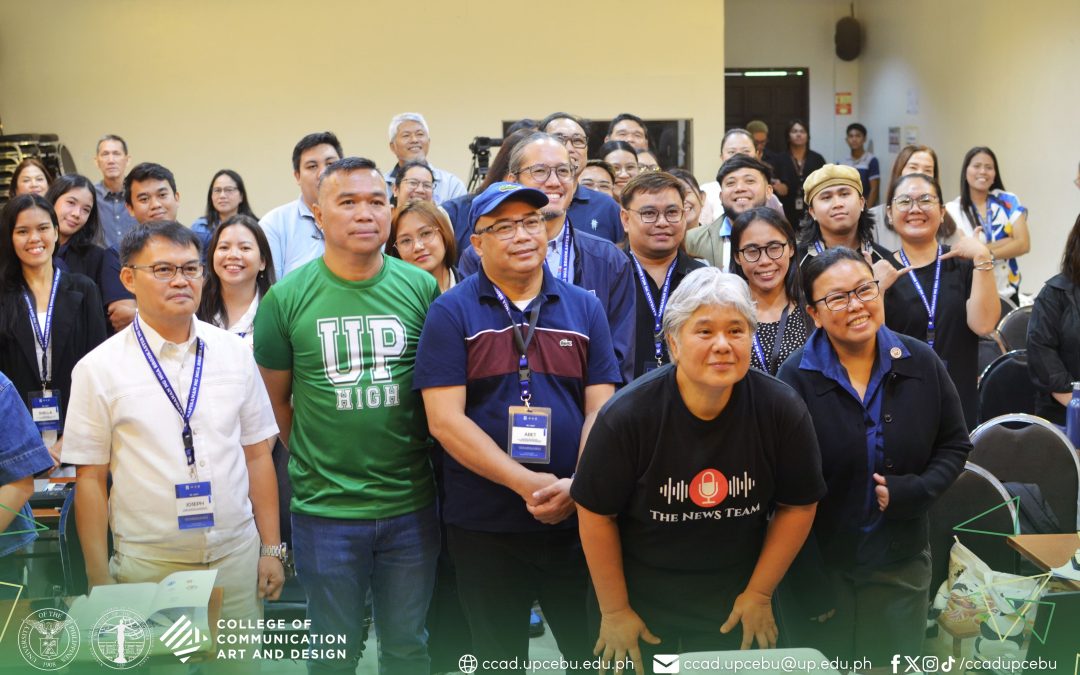
Documentation photos and video reel contributed by Earl Josh Patalinghug, Bianca Cano, and Mike Navales, KBP Student Volunteers
The Kapisanan ng mga Brodkaster ng Pilipinas (KBP), in partnership with the University of the Philippines Cebu and the College of Communication, Art, and Design, successfully conducted the two-day “Broadcast Relevance and Public Trust in the Digital Age: A Seminar on Journalism, AI, Ethics, and Responsible Broadcasting” on June 24–25, 2026 at the UP Cebu Audio Visual Room and Learning Commons.
The seminar-workshop gathered broadcasters, media practitioners, communication educators, and future communication professionals to discuss the changing landscape of Philippine broadcasting amid the rise of digital platforms, artificial intelligence, and evolving audience behaviors. Anchored on the values of responsible journalism, ethical storytelling, and professional accountability, the workshop aimed to strengthen the capacity of media practitioners and educators in navigating the opportunities and challenges of contemporary communication.
Through lectures, module activities, and an academic dialogue, the two-day workshop explored how broadcasting can remain relevant while continuing to uphold its responsibility to inform, educate, and serve the public.
Day 1 – Building Trustworthy Broadcast Content and Navigating AI in the Newsroom
The first day of the seminar-workshop opened with discussions centered on the foundations of credible journalism and the responsible use of emerging technologies in media practice. Following the opening remarks from the KBP Corporate Secretary Albert Sikat, and the welcoming remarks of UP Cebu Chancellor Atty. Leo B. Malagar, participants began a series of learning sessions focused on strengthening broadcast storytelling and newsroom innovation.
The morning session featured Charie Villa, a veteran broadcast journalist, who facilitated Module 1: “Building Trustworthy Broadcast Content.” With extensive experience in news reporting and media production, Villa guided participants through the essentials of responsible storytelling across traditional and digital platforms. The session emphasized the importance of accuracy, clarity, verification, and audience-centered communication in creating broadcast content that earns public trust.
Participants applied these principles through workshop activities involving broadcast script rewriting and story introduction exercises, allowing them to revisit newsroom practices and strengthen their storytelling approaches through producing short video reels.
In the afternoon, Villa continued the discussion through Module 2: “AI in the Newsroom: Power, Limits, and Responsibility.” The session explored the growing role of artificial intelligence in journalism, including its applications in research, content development, and newsroom workflows. Participants were introduced to both the possibilities and ethical risks of AI, particularly in relation to deepfakes, synthetic media, verification, and the continued need for human editorial judgment. The module was then followed by practical activities through fact-checking reports in assistance with AI-chatbots, rewriting given news prompts and simulating a live broadcast report.
The hands-on workshop challenged participants to examine responsible AI practices, highlighting that while technology can support journalists, accountability and ethical decision-making must remain at the center of the profession.
Day 2 – Public Affairs, Legal Responsibilities, and Ethical Broadcasting Practice
The second day focused on the broader responsibilities of broadcasters in shaping public conversations and ensuring that media remains a trusted platform for information and dialogue.
The morning session featured Angelo Palmones, Senior Program Host of MBC Media Group and a science journalist known for his work in environmental advocacy and public information campaigns. As a passionate advocate for responsible science communication, Palmones emphasized the importance of evidence-based storytelling, critical thinking, and meaningful public engagement in broadcast practice.
Palmones facilitated Module 3: “Public Affairs, Commentary, and Live Engagement,” where participants explored the responsibilities involved in public affairs programs, interviews, panel discussions, commentary, and live audience interaction. The session examined the distinctions between news, analysis, advocacy, and opinion while highlighting ethical approaches to handling public issues.
The afternoon sessions shifted toward the legal and regulatory dimensions of broadcasting through Module 4: “Legal Risk, Standards, and Broadcaster Protection.”
Leading the discussion on legal responsibilities was Atty. Edward Chico, Legal Counsel, who provided participants with practical insights into issues involving libel, privacy, fairness, and publication risks. The session highlighted the importance of understanding legal boundaries while performing the duties of a broadcaster.
The second part of the module was facilitated by Flordeliz L. Abanto, Deputy Executive Director of KBP, a media educator, public affairs producer, and children’s media advocate with more than four decades of experience in broadcast production, education, and public advocacy. Abanto discussed the KBP Broadcast Code, complaint processes, and compliance standards, reinforcing the importance of accountability, transparency, and professionalism in maintaining public confidence in broadcasting.
The session continued with group activities and role-play exercises, allowing participants to practice responsible interviewing, moderation, and engagement strategies in simulated broadcast situations, while also highlighting and reflecting on certain violations as stipulated by the KBP broadcasters’ code of ethics and handbook.
The second day concluded with participant presentations, critiques, reflections, and the awarding of certificates, marking the completion of the seminar-workshop component.
Day 3 – Academic Dialogue on Strengthening KBP-Academe Partnership
The final day transitioned from industry training to an academic dialogue focused on strengthening collaboration between the broadcast industry and communication educators. The session opened with a discussion led by Enrico Canoy on “The Role of the Academe in Strengthening Public Trust in Broadcasting.” Drawing from his experience as a broadcaster, and as the KBP Standards Authority Chairperson, Canoy emphasized the role of academic institutions in preparing future communication professionals who are equipped with ethical grounding, critical thinking, and an understanding of the responsibilities of media practice.
The academic dialogue provided a venue for educators and industry representatives to discuss current challenges, identify areas for collaboration, and develop recommendations for strengthening the KBP-academe partnership, most importantly in the areas of Broadcasting Internships and On The Job Trainings. Participants from various schools in Cebu and the Visayas reflected on how communication programs can better respond to the realities of the evolving media landscape.
The dialogue reinforced the shared responsibility of media organizations and academic institutions in developing communication professionals who can navigate technological change while remaining committed to ethical journalism, public service, and responsible broadcasting.
As the three-day seminar-workshop and academic dialogue concluded, KBP and UP Cebu reaffirmed their commitment to nurturing a media environment grounded in credibility, accountability, and public trust. The event served as a reminder that while broadcasting continues to evolve with technology, its greatest responsibility remains unchanged–to communicate truthfully and serve the public with integrity.
We thank the National Committee of the Kapisanan ng mga Brodkaster ng Pilipinas and KBP Cebu Chapter for partnering with the University of the Philippines Cebu and in extension, with the College of Communication, Art, and Design for this initiative.