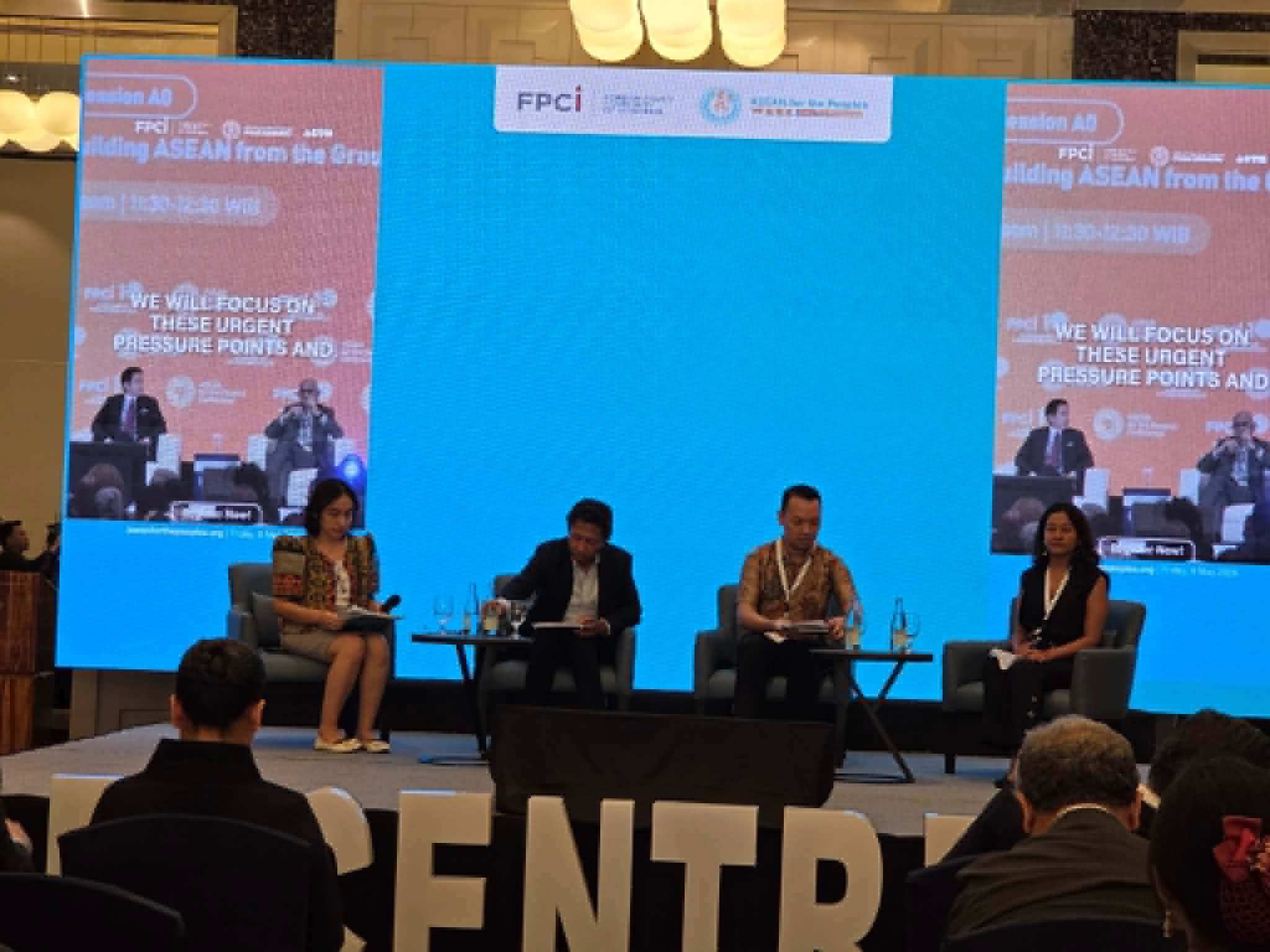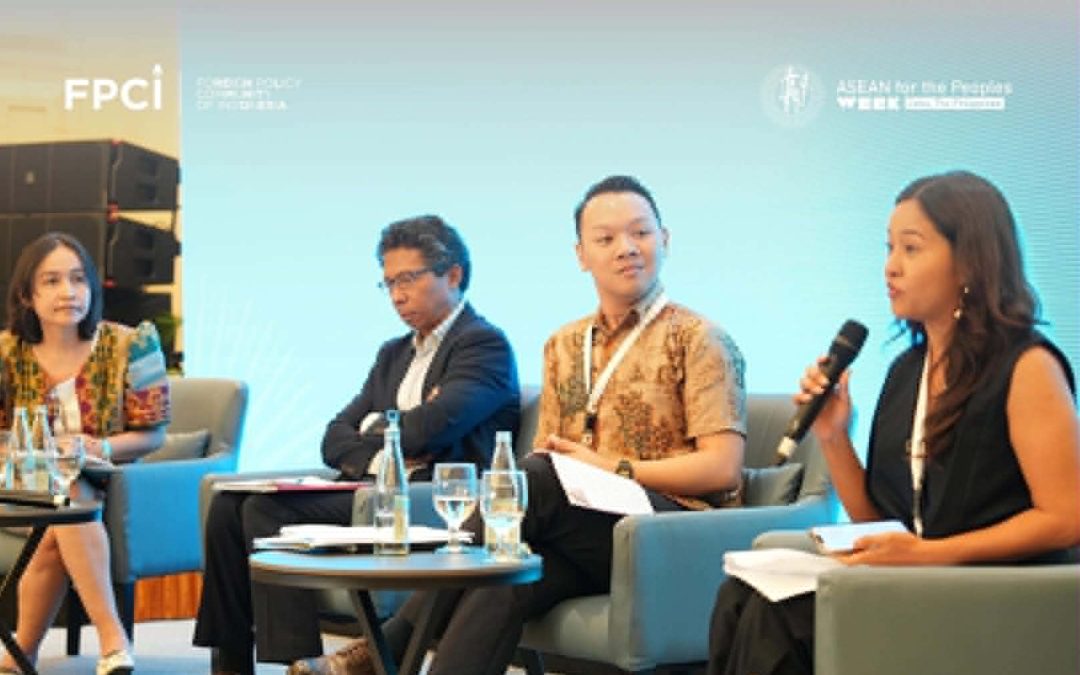
Dr. Crina E. Tañongon, Dean of the UP Cebu College of Communication, Art,
and Design (CCAD), moderated the session “SDGs in ASEAN: Progress, Gaps,
and What It Means to the Communities” during the ASEAN Community Town Hall held on May 8 at the Monte Carlo Ballroom of Mövenpick Hotel Mactan.
The session formed part of the ASEAN for the Peoples Week in Cebu – a series of activities for a people-centered ASEAN organized by the Foreign Policy Community of Indonesia (FPCI) on the sidelines of the 48th ASEAN Summit, in partnership with Kaabag sa Sugbo Foundation Inc., RCE-Cebu, and the University of San Jose-Recoletos.
The session gathered regional experts, civil society leaders, and policymakers in conversations on bridging ASEAN Sustainable Development Goals (SDGs) and community realities, focusing on urgent challenges confronting ASEAN from food insecurity and public health to climate-related disruptions and widening social inequalities.
Distinguished speakers included Amb. Nelson Santos of Timor-Leste, Dr. Phyu Phyu Thin Zaw of the University of Hong Kong, and Dr. Jose Ma. Luis
Montesclaros of Nanyang Technological University (NTU) Singapore, who
examined how ASEAN can accelerate action toward the SDGs and reimagine a more responsive post-2030 agenda grounded in Southeast Asian realities. Ambassador Santos underscored the need to translate ASEAN’s commitments into concrete action that directly benefits communities, while Dr. Zaw emphasized that the One Health approach can only succeed through stronger cross-sector collaboration, early detection systems, and community-based public health responses that connect human, environmental, and animal health across the region.
Dr. Montesclaros, whose work focuses on food security and human security in ASEAN, highlighted the need to move beyond narrow sectoral responses and adopt more inclusive, resilient, and people-centered approaches
to food systems amid climate and geopolitical disruptions.
As one of the discussants, Dr. Cherry Ballescas, RCE-Cebu President and
lecturer at UP Cebu Communication Program, stressed the urgency of activating collective and collaborative partnerships across local, regional, and global networks “NOW,” emphasizing that ASEAN’s strength lies in its people-familyhome-centered culture and in the meaningful involvement of communities and multisectoral organizations as the 2030 SDG deadline rapidly approaches.
Echoing insights raised by Atty. Ian Vincent Manticajon, also a UP Cebu
Communication Program lecturer, in his Freeman column Beyond the Summit Hall, the conversation also emphasized that while development indicators may suggest progress, realities on the ground often tell a different story, highlighting the crucial role of neighbors, communities, and civil society organizations in ensuring that ASEAN’s SDG agenda remains grounded in lived realities.
The forum ultimately emphasized that the SDGs cannot be addressed in silos, as issues of poverty, hunger, health, climate, and gender are deeply
interconnected and require collaborative, cross-sector, and community-centered responses.