
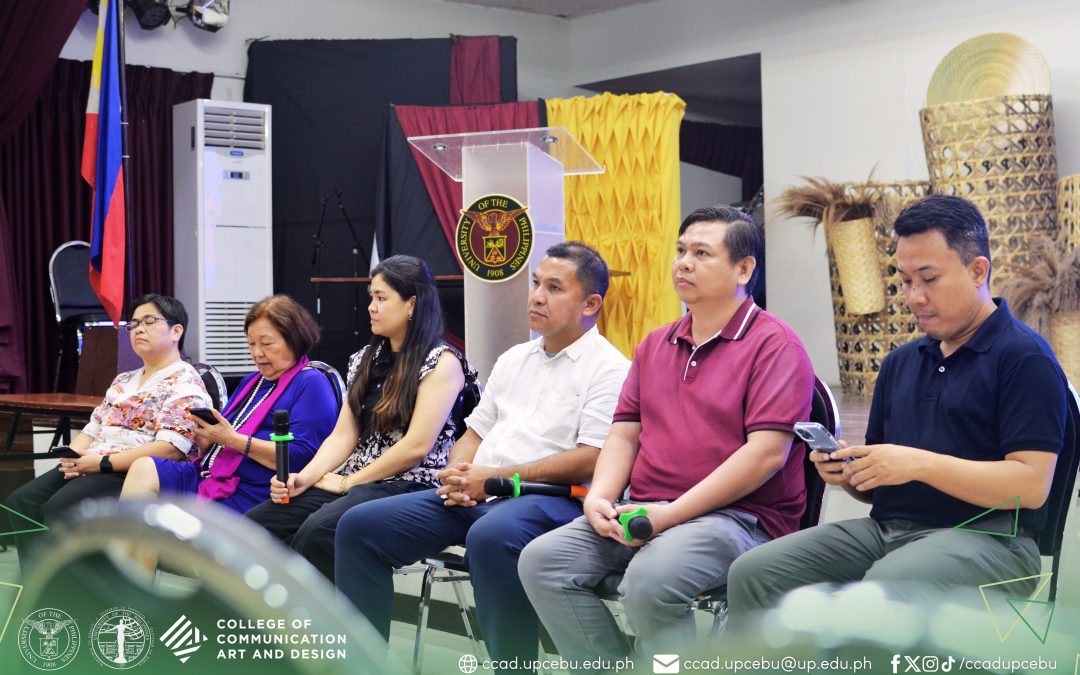
Recognizing the need for collaborative action in addressing the growing impacts of climate change, CCAD joined the Philippine Earth Justice Center (PEJC), RCE-Cebu, Cebu Anti-Corruption Coalition (CACC), and the University of the Visayas College of Law in co-convening the Multisectoral Consultation on Climate Justice, Flood Management, and Environmental Stewardship in Cebu at the Performing Arts Hall, University of the Philippines Cebu, last July 6, 2026.
The consultation brought together a diverse group of stakeholders from the academe, government agencies, legal institutions, environmental organizations, faith-based groups, and civil society organizations, including representatives from San Pio in Talisay, to engage in meaningful dialogue on the environmental issues confronting Cebu. Anchored on the shared goal of building more resilient and environmentally just communities, the gathering served as a platform where expertise, lived experiences, and community perspectives converged to examine the interconnected challenges of climate justice, flood management, environmental governance, and public accountability.
In her welcome remarks, Dr. Crina E. Tañongon, Dean of CCAD, emphasized the vital role of universities as spaces where interdisciplinary knowledge and public engagement come together to address urgent societal concerns. She underscored that institutions of higher learning must not only generate knowledge but also cultivate conversations that inspire collective action and strengthen partnerships among communities, policymakers, and advocates.
The afternoon’s discussions opened with Mr. Marione Bacalso, Asia-Pacific Regional Coordinator of the Laudato Si’ Movement, who reflected on the principles of Laudato Si’, encouraging participants to embrace an integral ecology that recognizes the inseparable relationship between environmental sustainability, human dignity, and social justice. His message reinforced the need for collective responsibility in caring for both people and the planet.
Providing a governance perspective, Dr. Brenette Abrenica of the Cebu Anti-Corruption Coalition presented a situational analysis of accountability and governance in Cebu, illustrating how transparent institutions, participatory governance, and responsible leadership are essential in responding to environmental crises. Her presentation reinforced the idea that resilience extends beyond infrastructure and disaster response—it also depends on institutions that are responsive to the needs of the people they serve.
Atty. Sikini “Bok” Labastilla of Civika Academy for International Development and the Diocese of Kalookan discussed how accountability and the rule of law remain central to advancing environmental justice, emphasizing the importance of good governance in addressing environmental issues. Complementing the discussion, Atty. John Menguito of the Philippine Earth Justice Center examined the growing use of Strategic Lawsuits Against Public Participation (SLAPP) against environmental defenders, highlighting how these legal actions are used to silence environmental advocacy and discourage civic participation. Their presentations reveals the importance of safeguarding civic engagement and ensuring that communities remain active partners in environmental decision-making.
Dr. Emma Estenzo Porio of the Field School for Climate and Disaster Resilience of Ateneo de Manila University also highlighted the principles of climate justice and disaster resilience. She emphasized that climate action must be rooted in the realities of communities most vulnerable to environmental degradation and extreme weather events, calling for policies that prioritize both ecological sustainability and social equity.
Lastly, Dr. Pamela Tolentino of the University of the Philippines highlighted the importance of science-based and participatory river management programs in addressing Cebu’s growing environmental challenges. She emphasized that effective river management requires the integration of scientific research, evidence-based policymaking, and the active involvement of local communities and stakeholders. Dr. Tolentino remarks that sustainable river systems can be achieved through informed decision-making and shared responsibility in protecting vital waterways.
One of the most meaningful moments of the afternoon emerged during the open forum, where the consultation shifted from expert presentations to listening to community voices. Participants from different sectors openly shared their experiences with climate-related disasters, particularly recalling the devastation brought about by Typhoon Tino in 2025. Stories of flooded communities, disrupted livelihoods, damaged homes, and the long road to recovery underscored the reality that climate change is not an abstract issue but a lived experience for many Cebuanos. Participants also raised concerns over watershed degradation, improper waste management, river rehabilitation, and the need for stronger collaboration among local government units, academic institutions, civil society organizations, and affected communities.
Rather than concluding with discussion alone, the consultation fostered a shared commitment among participants and convening organizations to continue working beyond the event. The concerns and recommendations raised during the open forum will serve as valuable inputs for future collaborative initiatives, policy advocacy, community engagement, and research efforts aimed at strengthening environmental governance and disaster resilience in Cebu. The convenors affirmed their commitment to sustaining these partnerships and transforming dialogue into concrete actions that respond to the environmental realities faced by local communities.
As one of the consultation’s co-convenors, CCAD reaffirmed its commitment to advancing public scholarship that bridges communication, research, and civic engagement. Through partnerships with academic institutions, legal practitioners, environmental advocates, faith-based organizations, and civil society groups, CCAD continues to champion spaces where diverse voices can collectively shape solutions to pressing social and environmental issues.
The consultation stands as a testament to the power of multisectoral collaboration in building a more resilient, accountable, and climate-just future for Cebu.